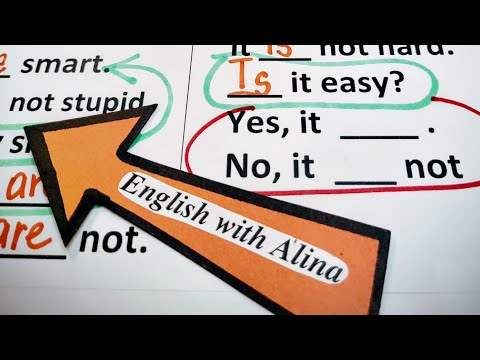
Negatives and Questions with 'To Be'
The verb 'to be' is special: it makes negatives and questions all by itself, without any helper word like 'do'. To make a negative, just add 'not' after the verb - 'I'm not ready', 'They aren't here'. To ask a question, simply put the verb before the subject - 'Is she at home?' This inversion is all you need, so you never say 'Do you are ready?' or write a statement like 'You are ready?' when you mean to ask a question.
Examples
- I'm not ready. the speaker is not ready
- Is she at home? asking whether she is at home
- They aren't here. they are not here
The full lesson
Everything in the video, in text.
-
Do you are ready? That sounds wrong — and there's one simple reason why.
-
With the verb to be, you make negatives and questions all by itself. No do, no helper word — just the verb.
-
Let's start with negatives. To say something isn't true, you just add not right after the verb be.
-
So: I am not, you are not, he is not. And in everyday speech we shorten them — I'm not, you aren't, she isn't.
-
Watch where not goes — right after the verb. I'm not ready.
-
Are not usually becomes aren't — same meaning, just shorter. They aren't here.
-
And is not becomes isn't. She isn't tired.
-
Now questions. To ask one, you flip the order — put the verb before the subject.
-
You are ready becomes Are you ready? She is home becomes Is she home? The subject and the verb simply swap places.
-
Just invert the two — Are you ready?
-
The verb comes first, then the subject. Is she at home?
-
Here's the big trap: don't borrow do from other verbs. Do you are ready? is wrong — with be, you only invert.
-
And in writing, keeping statement order isn't a real question. You are ready? should be Are you ready? — verb first.
-
One more handy thing: short answers reuse be too. Yes, I am. No, she isn't. You echo the verb — never do.
-
So remember: negatives add not after be; questions put be before the subject — and you never need do.