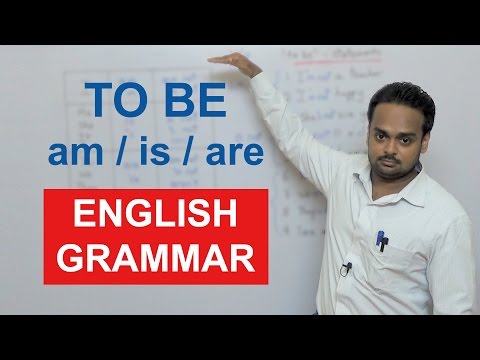
Present Simple of 'To Be': Am, Is, Are
The verb 'to be' has three present-simple forms: I am, he/she/it is, and you/we/they are. It links the subject to a noun, an adjective, or a place, as in 'She is a doctor', 'I'm tired', and 'We are friends'. In everyday speech we almost always contract it: I'm, you're, he's, she's, it's, we're, they're. Unlike many languages, English cannot drop this verb, so 'She happy' or 'I from Brazil' is always wrong, you must say 'She is happy' and 'I'm from Brazil'.
Examples
- I'm tired. the speaker feels tired
- She is a doctor. her job is doctor
- We are friends. the people are friends
The full lesson
Everything in the video, in text.
-
In a lot of languages you can just say she happy or I from Brazil. In English, that's broken — and the fix is always the same little verb.
-
That verb is to be. It's the very first verb you need in English, and it has three present forms. Get these three and you can already build real sentences.
-
Here's the whole pattern. I takes am. He, she, and it take is. And you, we, and they take are. Just three forms across every subject.
-
What does to be actually do? It's a linking verb. It connects the subject to who or what they are, to a quality, or to a place.
-
Let's see it. With I, use am — here, linking me to a feeling. I am tired.
-
With she, he, or it, use is. Here it links her to a job. She is a doctor.
-
With we, you, or they, use are. Here it links us to each other. We are friends.
-
It works for place too. You takes are, even for one person. You are at home.
-
And it takes is — for things, weather, the time. It is cold today.
-
Now the part that makes you sound natural. In real speech, English almost always contracts to be. I am becomes I'm, she is becomes she's, we are becomes we're.
-
So the doctor sentence, the way people really say it, sounds like this. She's a doctor.
-
Here's the big trap. Many languages drop the verb — she happy, I from Brazil. In English you can never leave to be out. The verb has to be there.
-
So remember: I am, he, she, it is, and you, we, they are. Never drop it — and in speech, contract it.